
Cinnamon’s Journey, From Soft Bark to Global Spice
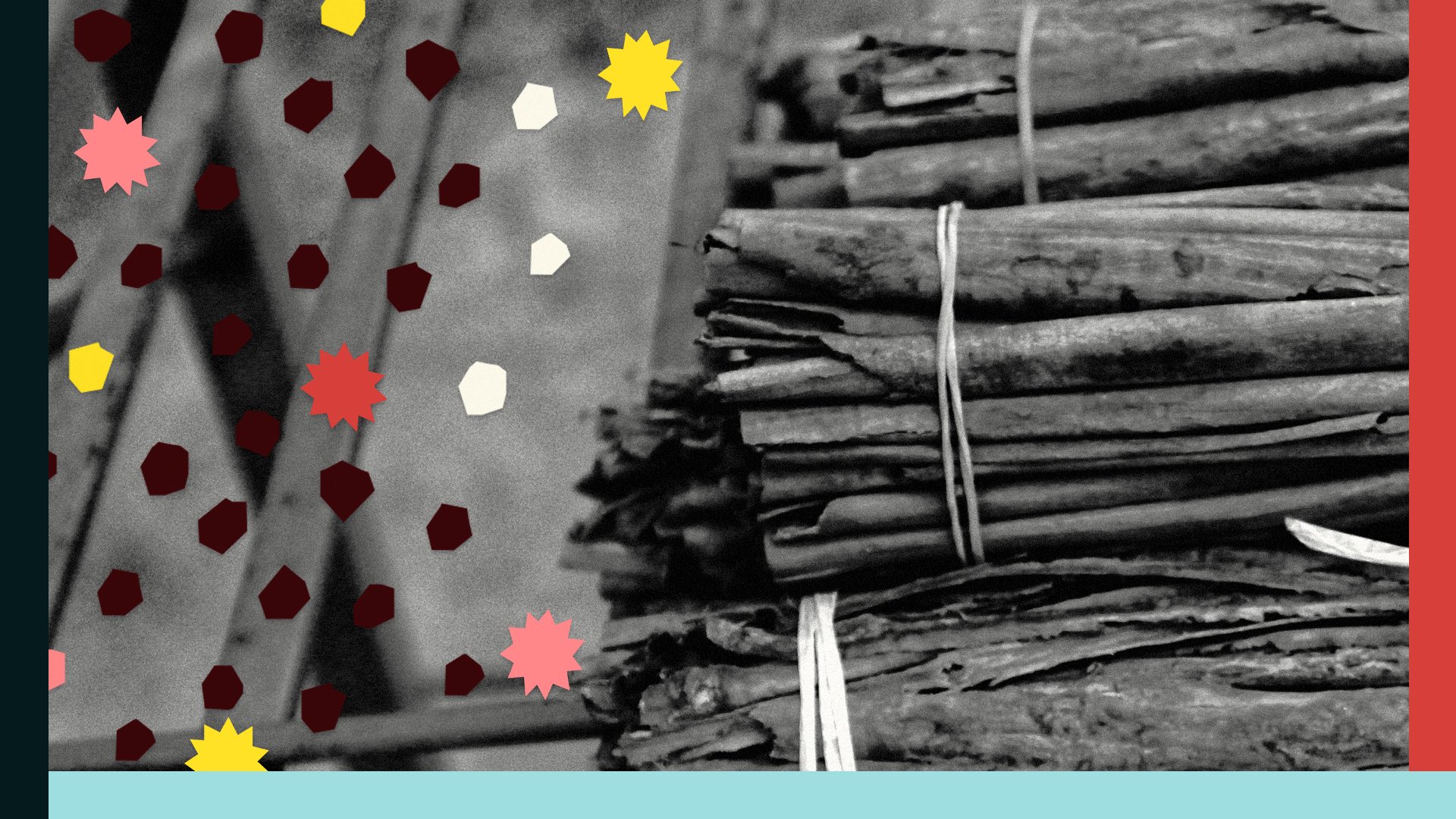
Photo Illustration: Humanizing History Visuals. Photo: Vidarshana Sandaruwan, CC BY-SA 4.0, via Wikimedia Commons
Welcome to Humanizing History™! Every month, we feature a central theme. Each week, we dive into different areas of focus.
This month’s theme: Origins of Food, Our Shared Human Story
This week’s focus: Historical Literacy, or helpful frameworks to expand how we approach history and identity
Today’s edition of Humanizing History™ is about 1,100 words, an estimated 4-minute read.
The Why for This Week’s Topic
This month, we’re exploring the layered histories of familiar foods — ingredients that feel deeply rooted in various cultures, yet often trace their origins to different continents, climates, and communities.
Some of these journeys unfolded through trade, migration, and cultural exchange. Some, unfortunately, also moved through histories of colonization, displacement, and forced labor.
But food is more than a story of movement — it’s also about care. About knowledge passed through generations. About the countless hands that planted, harvested, cooked, and preserved.
By telling these stories with intention, we can begin to rehumanize this history — not by diminishing any culture, but by recognizing how cuisines (like culture) are built collectively, over time.
This month, we’re asking:
How do ingredients travel the globe and become part of a culture far from their origins?
Whose hands and knowledge made this journey possible?
What stories emerge when we trace the origins of the foods we may take for granted?
And, what changes when we trace food not just through empires and trade routes, but through systems of knowledge and cultural innovation?
For our first week, we explored the tomato. Last week, the potato.
This week, we turn to an ingredient many of us keep quietly tucked away in our cupboards: cinnamon.
And as we’ll see, this is not a quiet story, but one packed with global significance.
Cinnamon as a Global Flavor
Once a rare and coveted spice, cinnamon is now nearly everywhere.
It warms drinks like chai, horchata, mulled wine, and lattes. It sweetens desserts like apple pie, churros, and zimtstern cookies. It anchors savory dishes too — balancing sauces like bolognese and moussaka, grounding curries and tagines, flavoring beef pilau, and forming the backbone of “five spice” blends for pork belly and duck.
Cinnamon is remarkably flexible. It feels universal. But for most of human history, it wasn’t.
Cinnamon was once hidden inside the bark of trees growing on an island in the Indian Ocean: Sri Lanka.
At one point in history, cinnamon was considered more valuable than gold. How did it transform from soft inner bark on fertile hillsides to a commodity that traveled the globe and shaped trade, empire, and taste?
Early Roots of Cinnamon
Sri Lanka is an island of “remarkable biological,” ecological, and cultural diversity.
Mountain ranges rise through its center, rivers cascade toward coastal plains, tropical rainforests hover alongside beaches, and ancient cities mark millennia of human innovation.
Long before cinnamon appeared in markets or kitchens, it grew quietly in these forests — as bark on slender evergreen trees. Thousands of years ago, Indigenous peoples of Sri Lanka — the Wanniyalaeto, or Veddas — discovered something extraordinary: the inner bark of certain trees was edible, fragrant, and warming.
They learned the meticulous process for harvesting, peeling, and drying it so it curled naturally into delicate quills. This was not accidental; it was knowledge built through scientific observation, experimentation, and care.
For thousands of years, across Sri Lanka, cinnamon had health and ritual application; it was burned for aroma and consumed as a “remedy for respiratory and digestive ailments.”
Before cinnamon became a globally traded spice, it was a relationship — stretched across millennia — among communities, hands, and land.
Cinnamon, Passing Hands
From growing in the forests of Sri Lanka to influencing global trade, cinnamon has wielded mythic, medicinal, and economic power.
By 2000 BCE, it was traded across South Asia, Arabia, and East Africa.
In Ancient Egypt, it was used in embalming and religious rites; Greek and Roman societies burned it at funerals to purify the air.
Arab traders carried cinnamon across vast trade routes, sometimes keeping its source secret. Legends, told nearly 2,500 years ago, describe a giant mythical bird that built nests from delicate cinnamon sticks — traders supposedly had to bait the birds with meat to collect the precious bark. These tales reflect the almost mythic value cinnamon held and the lengths humans went to secure it.
During European colonization, an increased quest for spice drove centuries of trade, laying early foundations for globalization. Portuguese, Dutch, and British empires fought to control cinnamon, reshaping Sri Lanka’s political and economic future.
And yet, even amid these colonial powerplays, the knowledge of how to grow and harvest cinnamon remained rooted on the island itself.
A Taste of the Past and Future
Today, across Pettah Market in Colombo, Sri Lanka, cinnamon sits neatly in jars and bags, on crowded shelves — its humble presence a legacy thousands of years in the making.
To this day, Sri Lanka produces the vast majority of the world’s Ceylon cinnamon — often called “true cinnamon.” Harvesting it remains precise, skilled, and laborious work — techniques inherited over generations.
Branches are cut at inward angles so the tree continues to regenerate for decades. After harvesting, the outer bark is removed with brass rods, revealing the soft inner layer, which is gently carved into thin strips. These curl naturally as they dry, forming cinnamon quills.
Suneth, a harvester in Sri Lanka, shares: “The cinnamon tree doesn’t die. It continues to live and sprout new plants. We cut in a manner so that new plants sprout within 14 days.”
While other varieties of cinnamon, like cassia grown in China or Indonesia, exist, Ceylon cinnamon is prized for its lower coumarin content and delicate, warm, sweet flavor. It has gained renewed attention for its potential health benefits, including cardiovascular support and antioxidant and anti-inflammatory properties.
In 2022, the European Union granted Ceylon cinnamon protected geographical status, recognizing that only cinnamon grown in Sri Lanka can be called “Ceylon” cinnamon — similar to how Champagne must come from a specific region in France. This designated status could be viewed as an acknowledgment of the generations of knowledge, labor, and care embedded in this spice.
Cinnamon reminds us that food is never just a flavor.
It’s land. Memory. Labor. Care.
Each time we stir cinnamon into a dish or sip it from a cup, we taste a story informed by millennia — shaped by unnamed hands who learned how to listen to trees, work with seasons, and transform hidden bark into something that traveled the world, shaping palettes, health, and cultural practice across continents.
Next time you reach for cinnamon, consider pausing to ask: Which hands carried this story forward — and what other histories hidden in our kitchens are waiting to be told?
Theme: