
SUMMER 2026: ubd + humanizing history workshops!
How do we tell the human story?
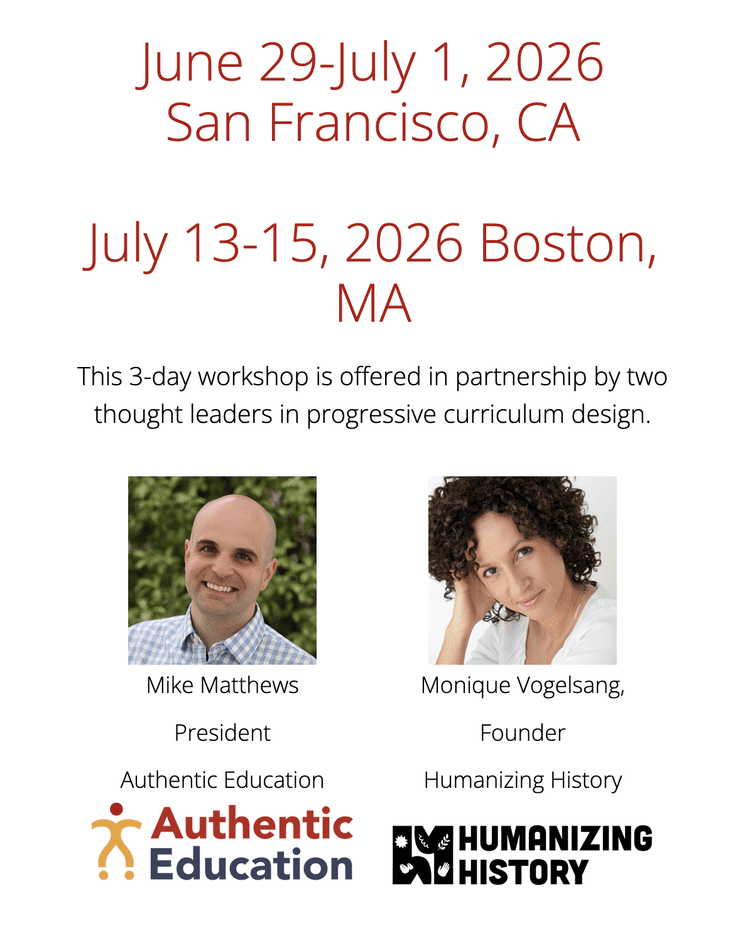
Join Mike Matthews & Monique Vogelsang for a 3-day intensive to expand your thinking about best practices for including underrepresented voices, untold stories, and broader perspectives into your curriculum design, resulting in more inclusive and culturally expansive units.
For many educators, across grade levels and subjects, our work is connected to the larger human story.
Whether we are teaching content that spans social studies or STEAM, educators not only influence academic understandings, we also shape how our students view personal identity, culture, community, and how we understand our place in the larger world.
The resources we use, the questions we ask, and the activities students engage in not only support academic growth, if left unquestioned, they can also create a sense of exclusion, or — with intention and affirmation — can cultivate inclusion.
Therefore, it’s important that we reflect on our choices to ensure that the content we teach is age-appropriate, rooted in facts, and has many “windows and mirrors” for our students.
Over the course of three days, through interactive workshops and small group working sessions, participants will examine a curricular unit they’d like to revise with the lens of inclusion.
Led by two educational leaders — Mike Matthews of Authentic Education and Monique Vogelsang of Humanizing History — participants of this professional development experience will be guided through frameworks of Understanding by Design and models of culturally expansive teaching.
Participants will explore the larger story our curricular units are designed to tell, will consider how we name and frame our ideas, and will craft identify Transfer Goals, Enduring Understandings, and Essential Questions.
By the end of our three-day workshops, educators and school leaders will have a “ready-to-teach” UbD unit and a plan of action to bring back to their school community, which may serve as a model inclusive curriculum design.
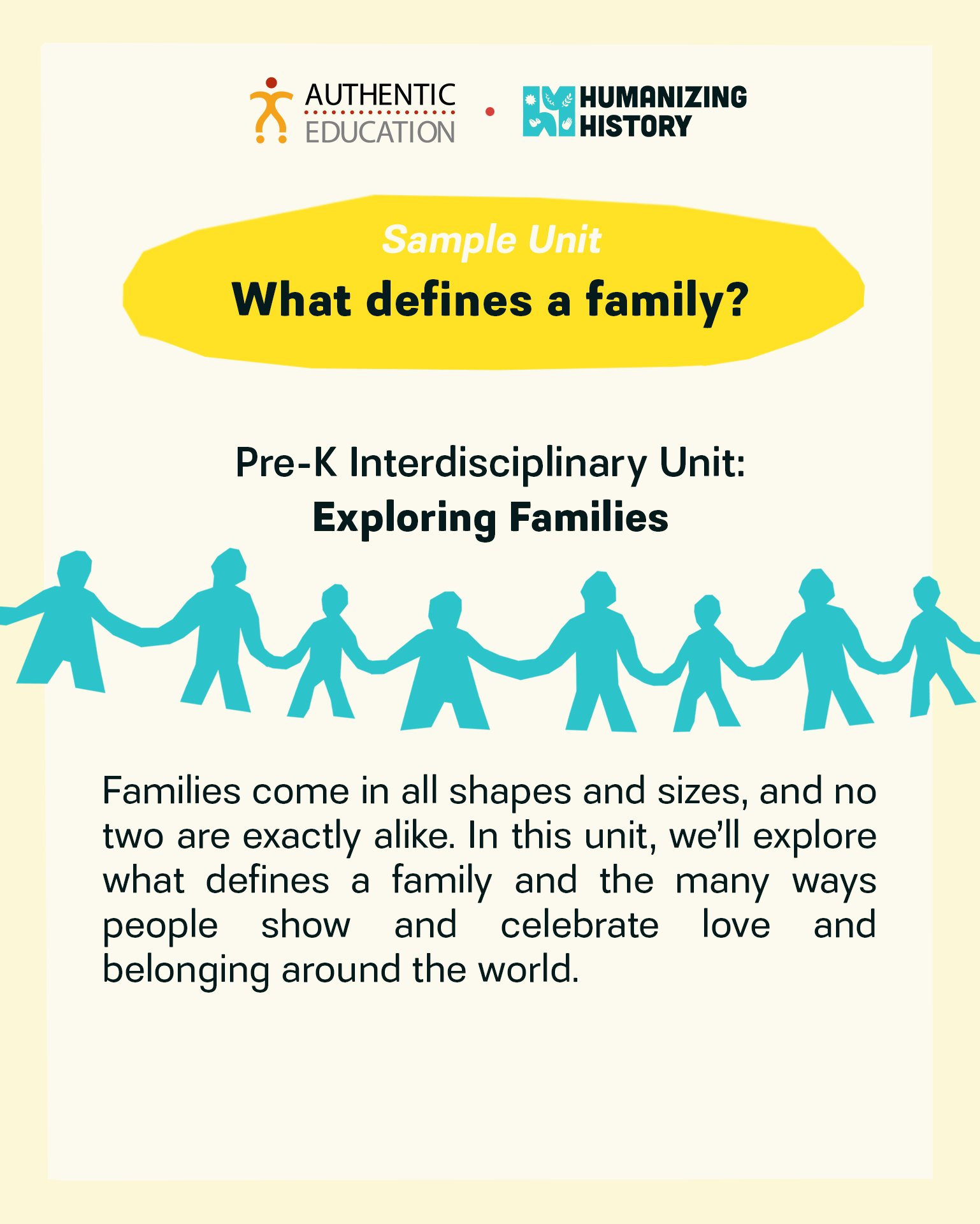
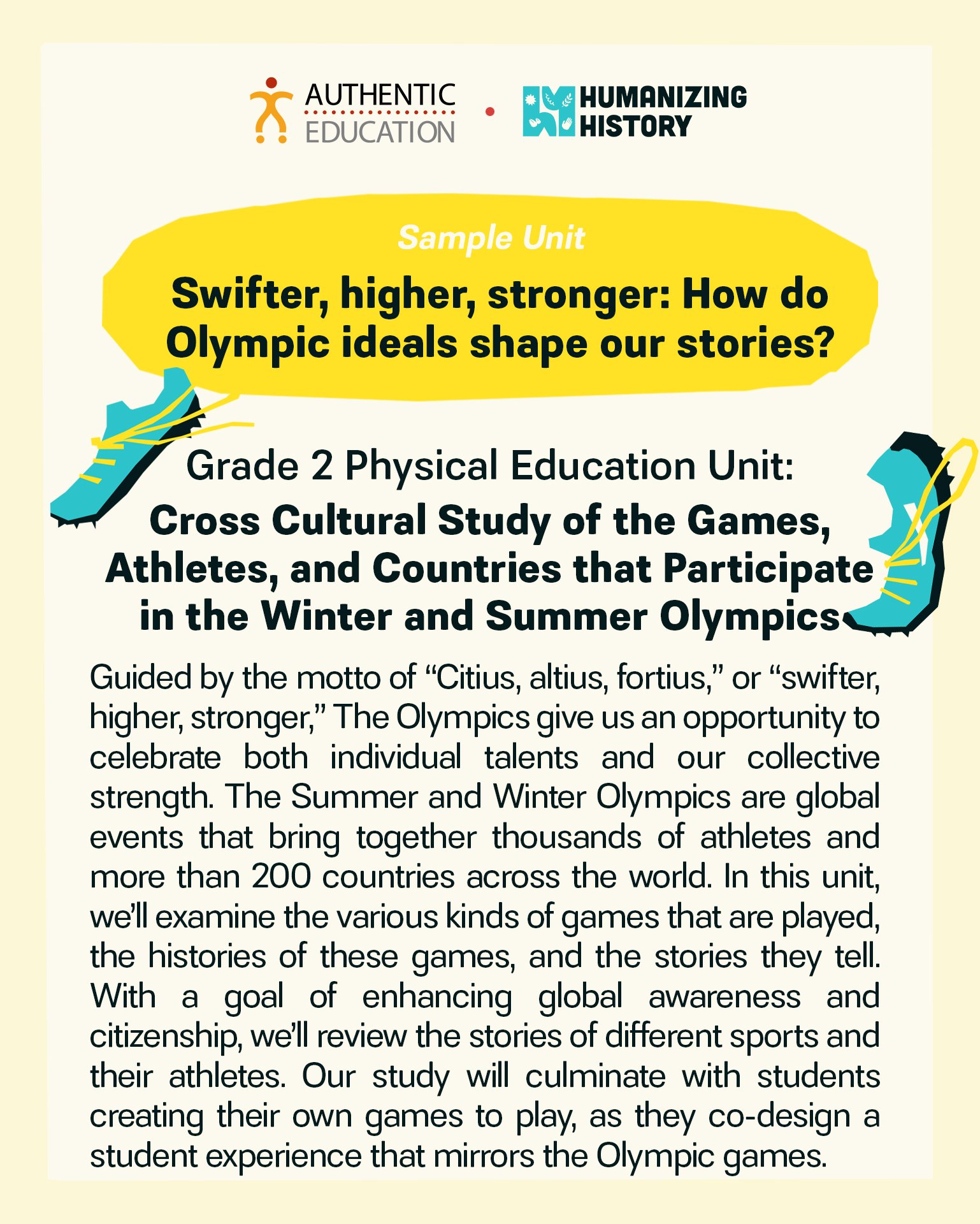
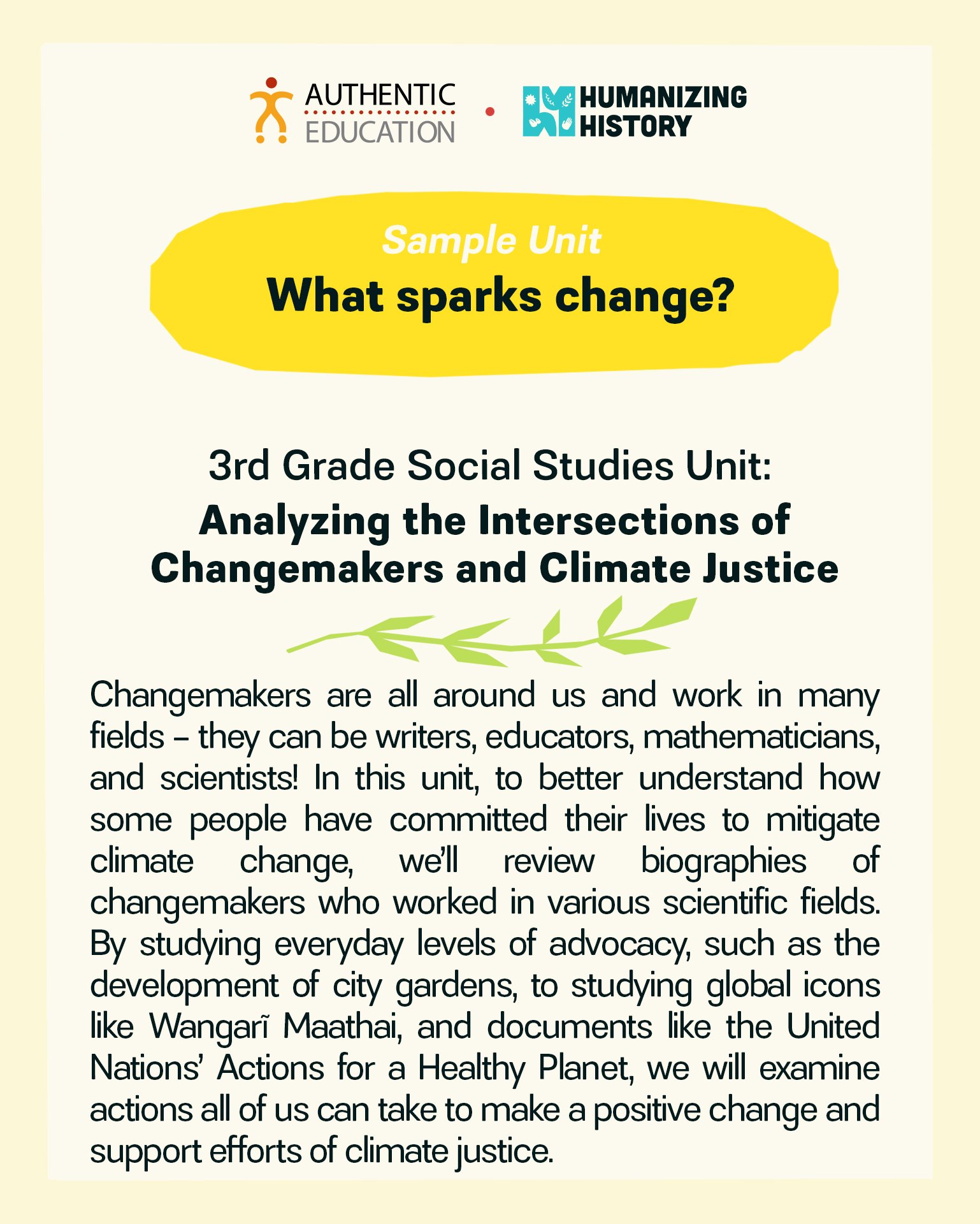
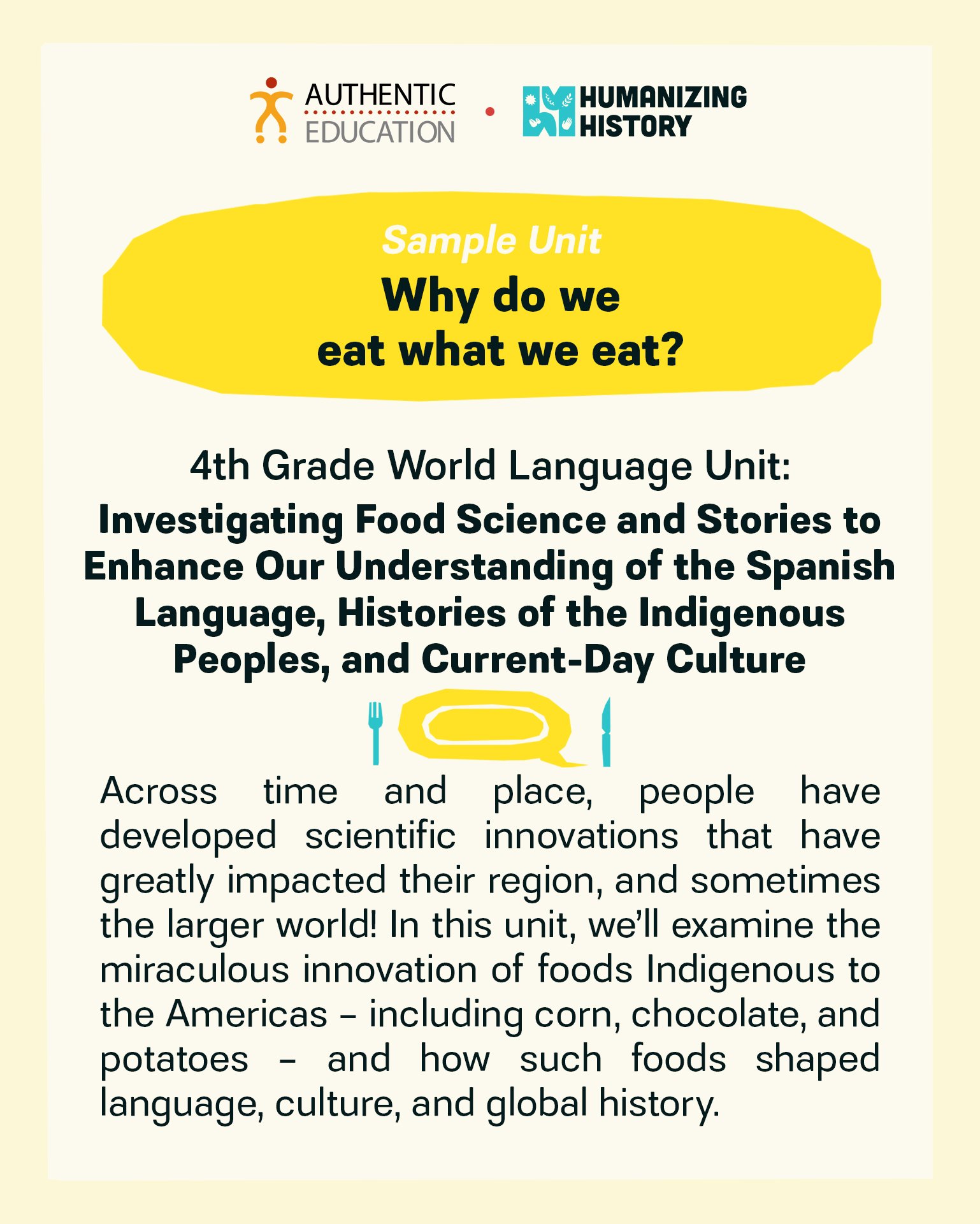
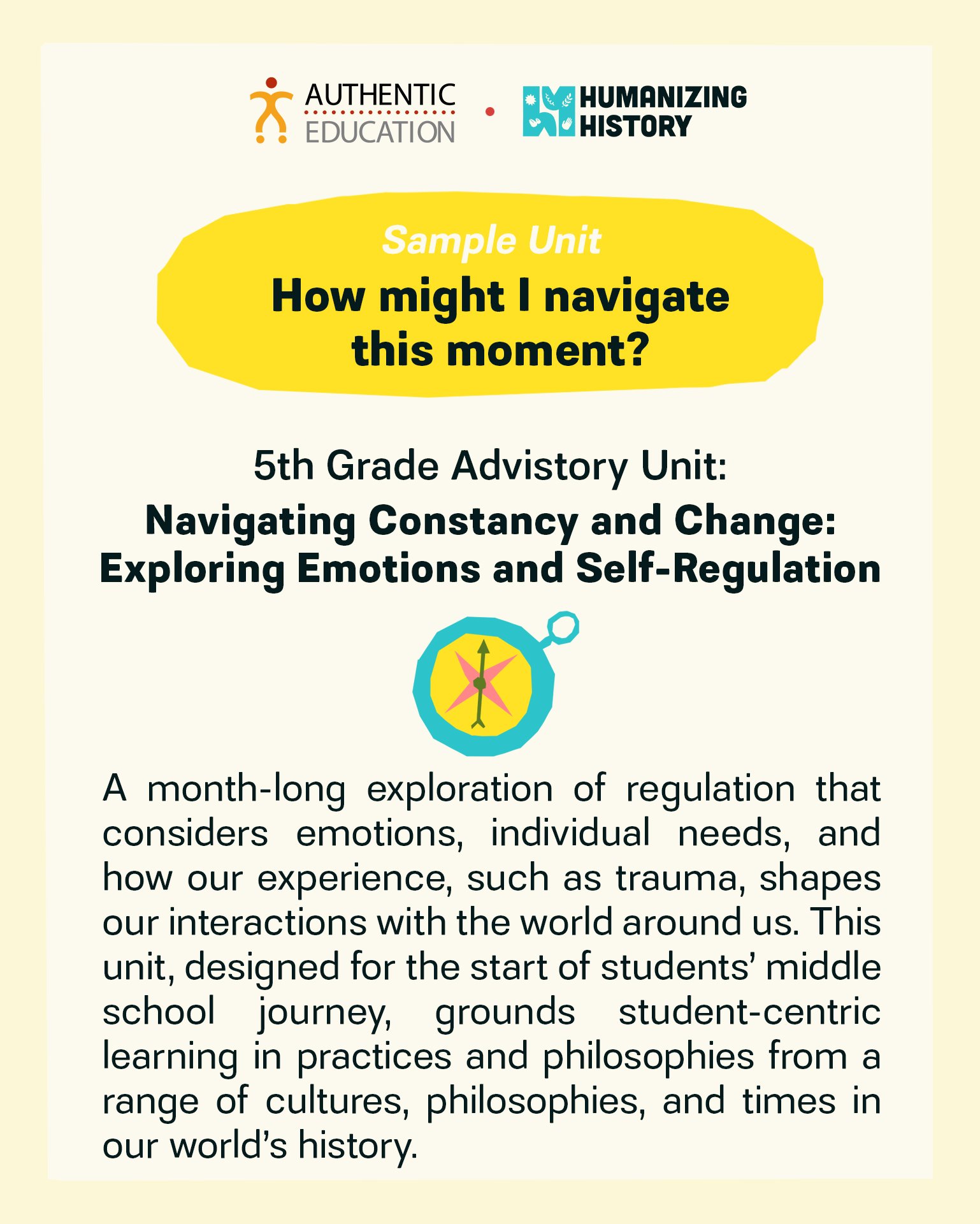
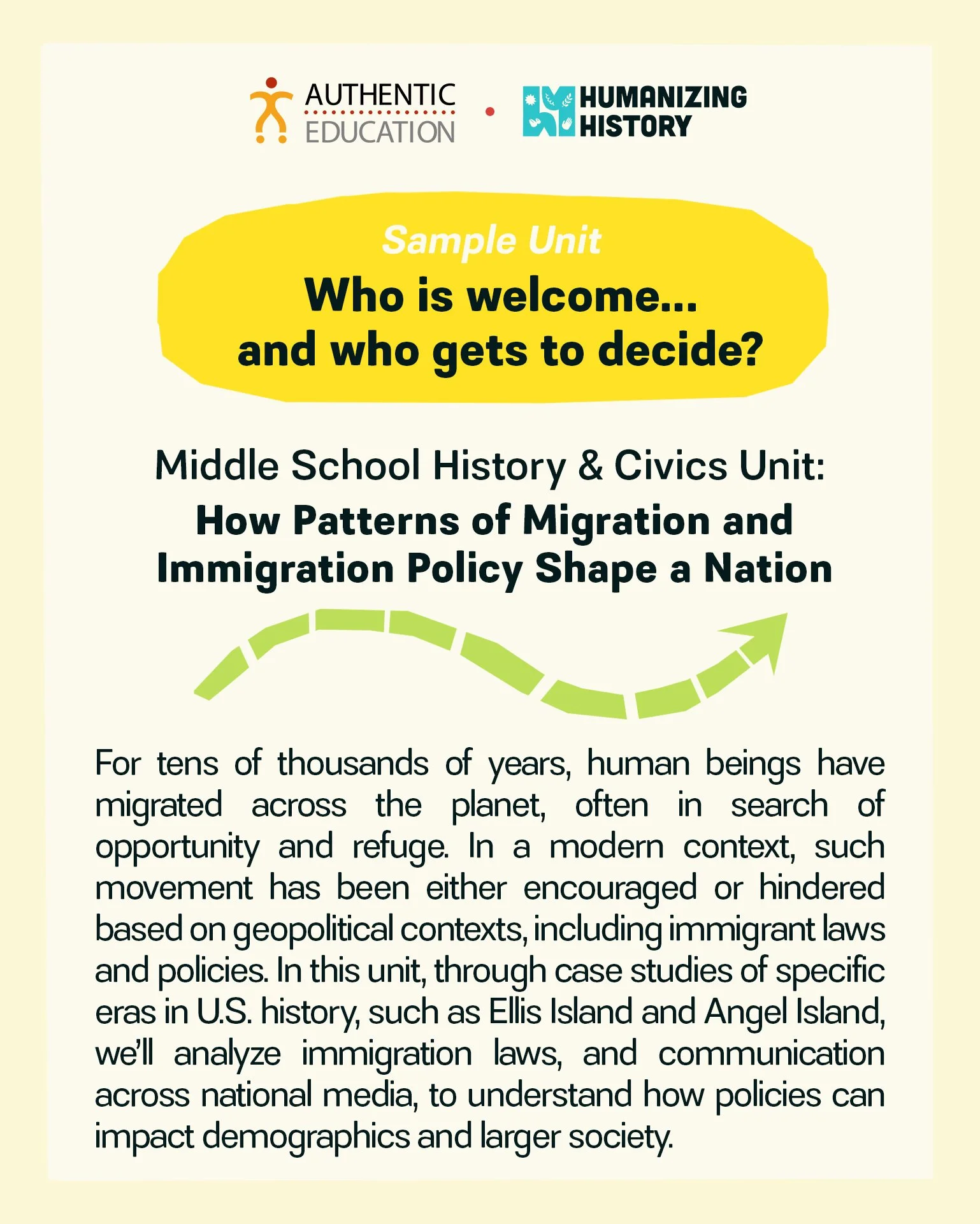
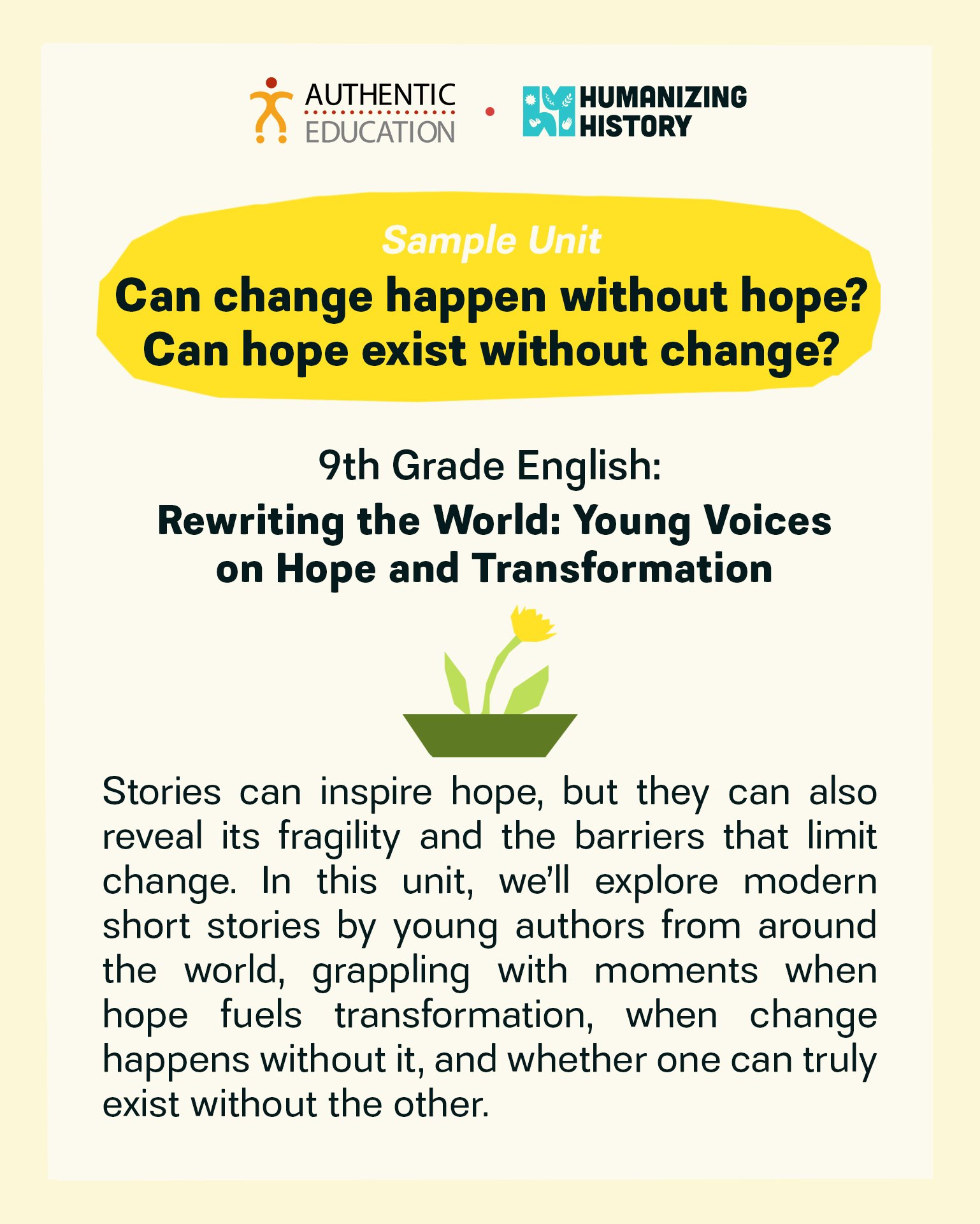
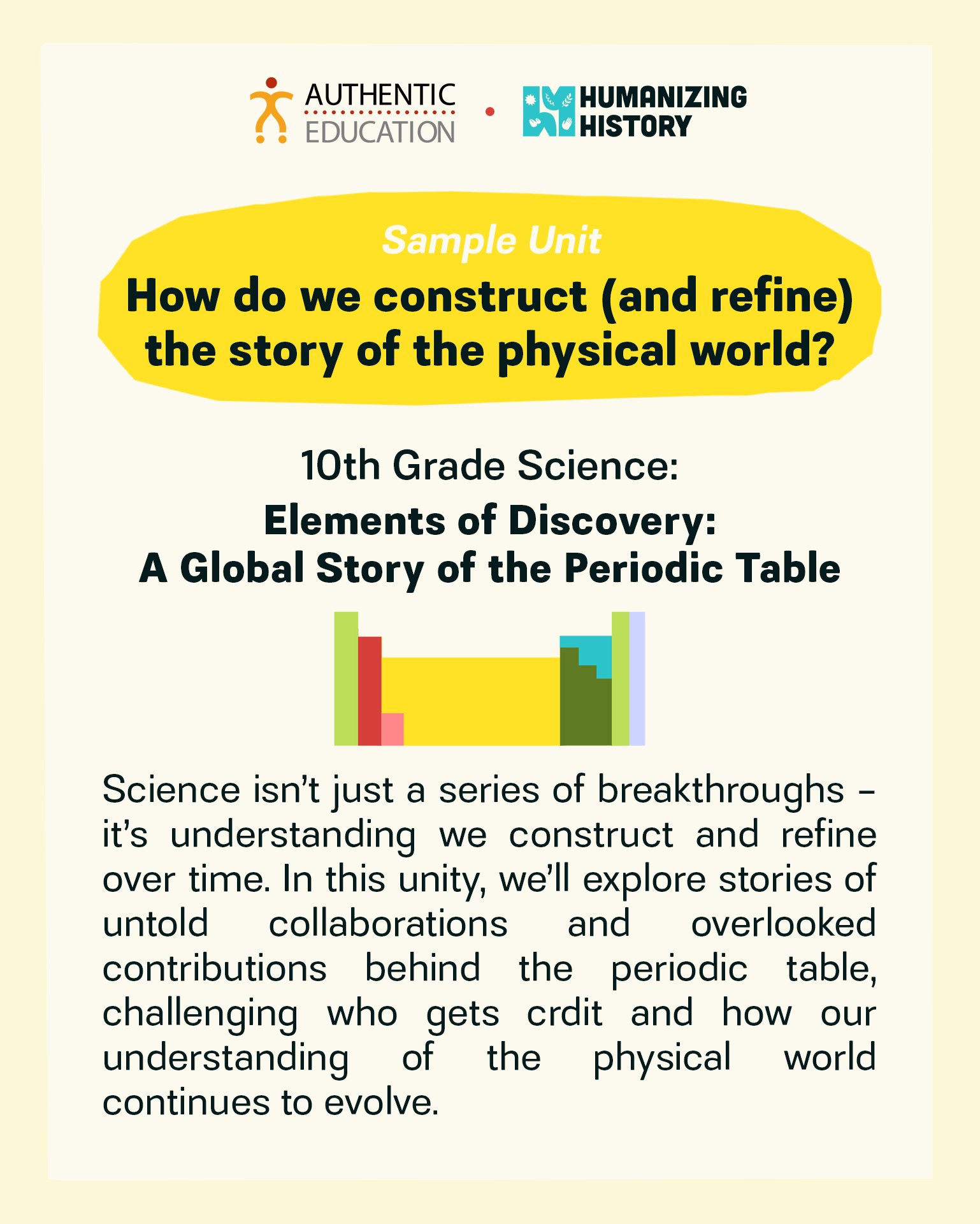
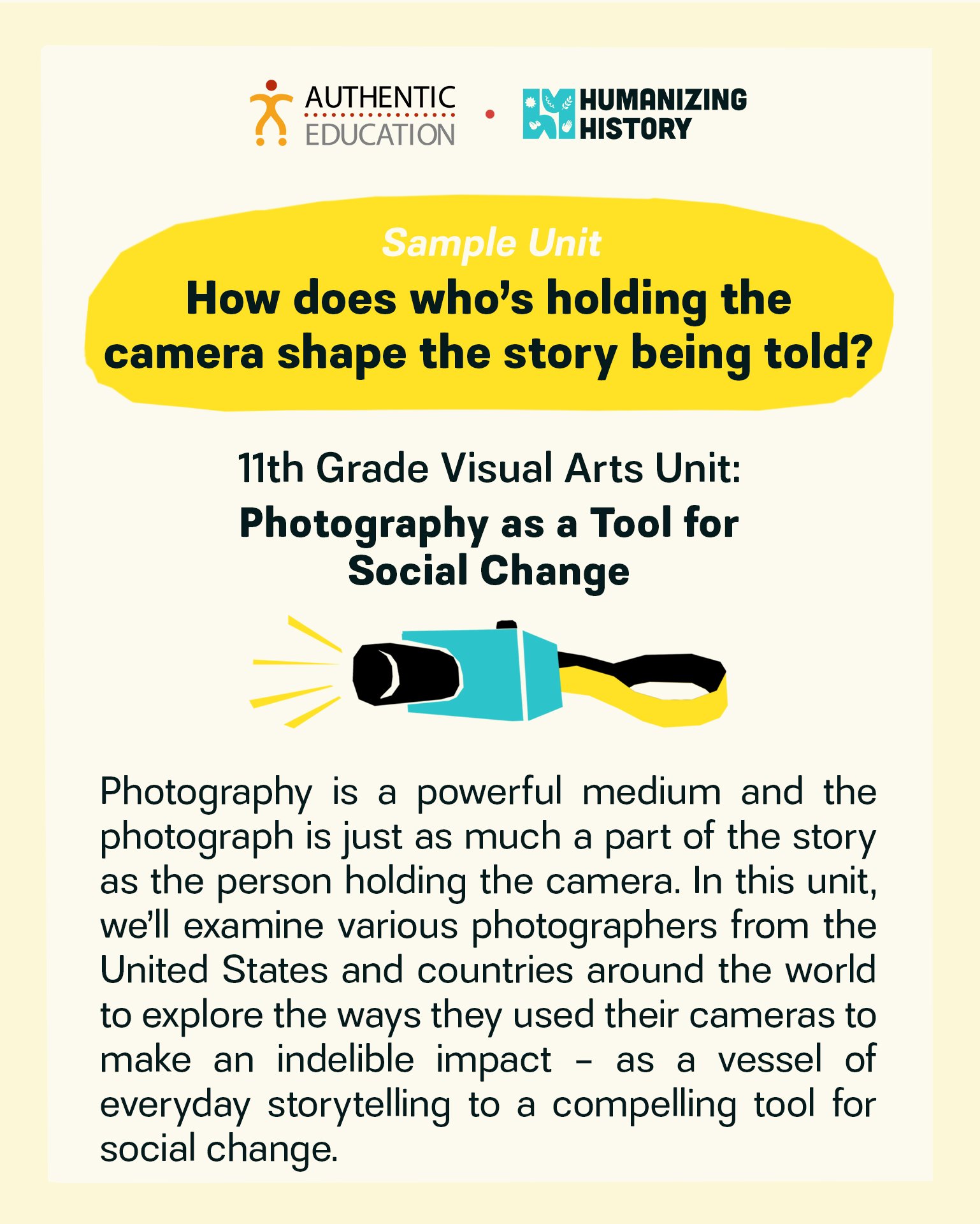
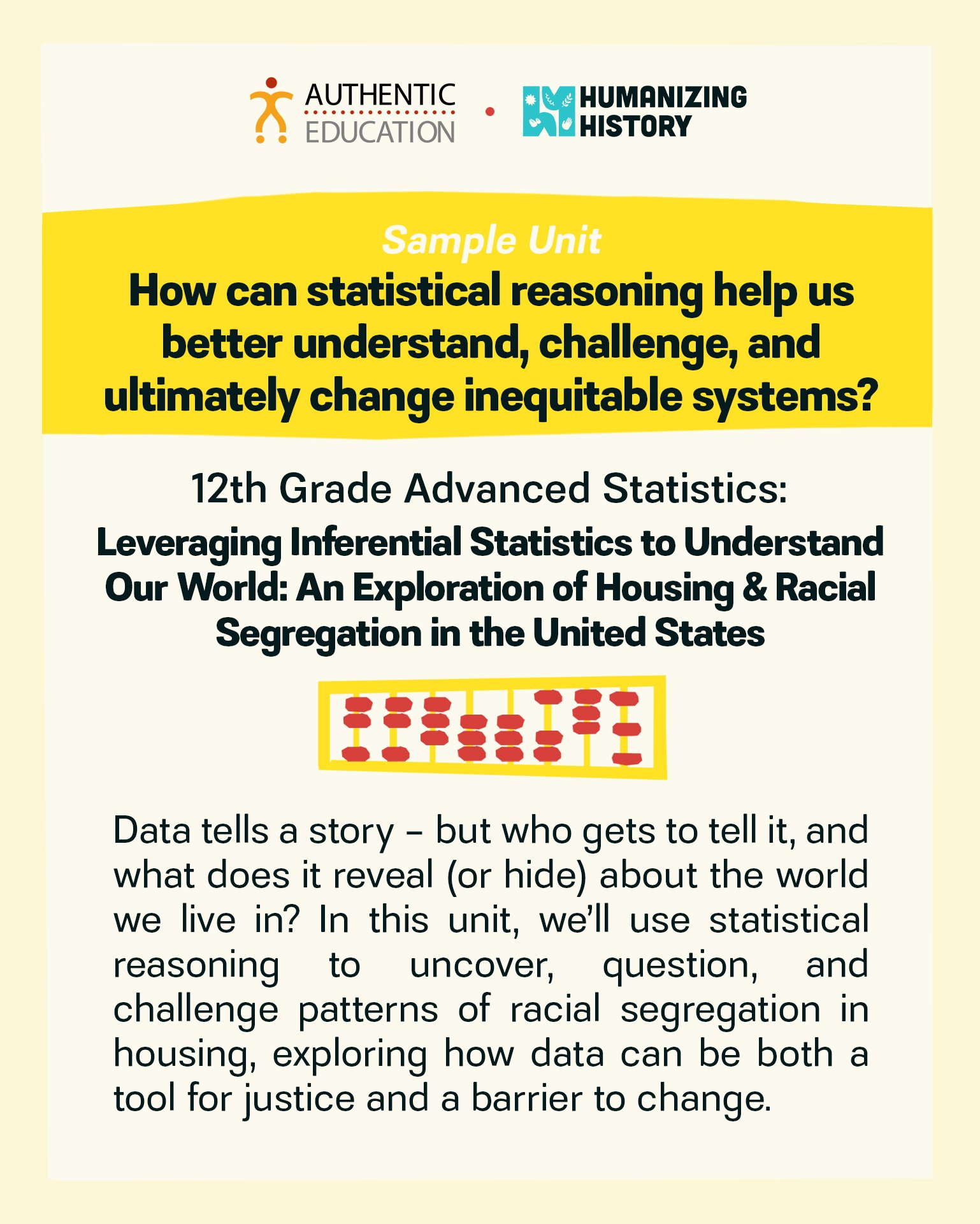
Sample Units
Examples of UbD units backwards designed with inclusivity, equity, & belonging front of mind.
Registration Details
-
The registration fee for this 3-day workshop is $2,295.
If a school sends more than one person, each additional registration is $300 less (or $1995 per person after the first registrant).
-
With only 24 attendees, participants can expect an engaging, personalized, and highly collaborative experience
-
You will receive a copy of a UbD book and a customized workbook for the sessions
-
Delicious and nutritious breakfast, lunch and snacks will be catered by Boston’s MAX Catering
-
You will have access to AE’s digital resource library for one year after the workshop
-
Mike & Monique will facilitate a pair of virtual gatherings after the in-person sessions
-
Receive on demand feedback on your unit from Mike and Monique
Frequently Asked Questions
-
This workshop is for educators in Pre-K through 12th grade schools. This includes Teachers, Curriculum Leaders, Division Directors, Deans, Heads of School, and DEI Directors, and anyone interested in designing a UbD unit with inclusivity front of mind.
-
Attendees will:
– Build their proficiency using the Understanding by Design framework to design curriculum grounded in deep understanding and real-world application;
– Learn strategies and a framework for backwards curriculum design including humanizing, culturally expansive, antiracist, identity-centered, and affirming lenses;
– Develop strategies to proactively build rigorous and joyful curriculum grounded in positive identity development and embraces nuanced perspectives; and
– Design a “ready-to-teach” UbD unit that is deeply grounded in principles of inclusivity, equity, and belonging.
-
Yes. This is designed as a three-day offering. If you cannot attend all three days in July, we invite you to consider attending a subsequent offering of this workshop or one of AE’s shorter summer offerings.
-
No. This session is for anyone interested in reimagining a unit with inclusivity front-of-mind, from a Pre-K unit on seasons to a 12th grade Calculus unit.
-
Yes. We can work with you to identify ways to apply this workshop to your individual situation, role, and/or context. For non-teaching attendees, possibilities include:
– Attending with a teacher or group of teachers from your school and working with them to collaboratively design a unit;
– Backwards designing a Professional Development event or series using the Humanizing History and UbD frameworks; and
– Planning a school-wide initiative using the frameworks and ideas from the workshop (e.g., reimagining “Grandparents & Special Friends Day,” an advisory program, or a Parent Education series). -
We know that life happens. We’ve created registration transfer and refund policies to give you peace of mind should something come up that changes your availability.
Registrants unable to attend the retreat may send someone in their place, by making a request in writing at least 3 days prior to the start of the retreat. Requests to transfer to an alternate retreat session will be considered on a case-by-case basis. All registration transfer requests must be made in writing via email to events@authenticeducation.org.
Cancellations submitted by the specified date (see Terms of Service), will receive a full refund of registration fee, less a $100 processing fee. No refunds will be issued for cancellations submitted after specified date. Refunds will be issued in the same form as the original payment when possible. Authentic Education does not award payment credit towards future services or events. All refund requests must be submitted in writing via email to events@authenticeducation.org.
-
UbD experience is welcomed and not required. The small group format allows us to tailor instruction and support to meet all attendees where they are, whether they’re new to UbD or have extensive experience designing curriculum using the framework.
-
The Inclusive Curriculum Design workshop will be co-led by Mike Matthews, President of Authentic Education, and Monique Vogelsang, Founder of Humanizing History.
-
To ensure a high-quality and highly-personalized workshop with significant individualized coaching and support, registrationis capped at 24 participants.
-
The worskhop will run from 9am-4pm each day, with breakfast available starting at 8:30am and a one-hour lunch break.
The daily schedule will be:
8:30am – Breakfast
9:00am – Morning Session
12:00pm – Lunch
1:00pm – Afternoon Session
4:00pm – End of day
-
Due to the small group and collaborative nature of the retreats, we require folks to attend in-person. We do periodically offer virtual trainings as well, so if you’re interested in participating, please sign up for our newsletter at authenticeducation.org/blog/
-
Early bird Registration is $2245
Standard Registration is $2295Payment is due at time of registration to confirm your spot.
For schools sending more than one participant to our summer offerings, a $300 credit applies to the second and any subsequent registrations.To register a group of teachers, please email us at events@authenticeducation.org. If folks register at different times, we’ll refund the applicable credit automatically.
-
The registration fee includes:
– Attendance at the 3-day small group workshop
– Follow-up virtual session(s) with Mike, Monique, and the workshop cohort
– Asynchronous feedback on their unit after the workshop
– Breakfast, lunch, and snacks each day
– One Understanding by Design book and workbook workbook
– Access to AE’s resource library for one year after the workshop
The retreat fee does not include any travel expenses, including without limitation, mileage, parking, hotel, flights, and meals outside of the retreats.
-
You will need a laptop or a tablet with a keyboard. Attire is casual. We’ll provide everything else!
-
No. This session will leverage the Understanding by Design 2.0 template developed by the late Grant Wiggins (founder of Authentic Education) and Jay McTighe. Our process for thinking about learning goals, assessments, and lessons will include an exploration of underrepresented voices, untold stories, and broader perspectives – resulting in more inclusive and culturally expansive units.
In 2016, Authentic Education first offered an “Inclusivity by Design” workshop for a partner school. This workshop builds on that legacy, the groundbreaking work of Humanizing History, and will maintain the highest fidelity to the UbD framework.
-
We’re here to help! Email us at events@authenticeducation.org and we’ll get back to you as soon as possible.