
Rice’s Journey, From Asia and Africa to a Global Staple
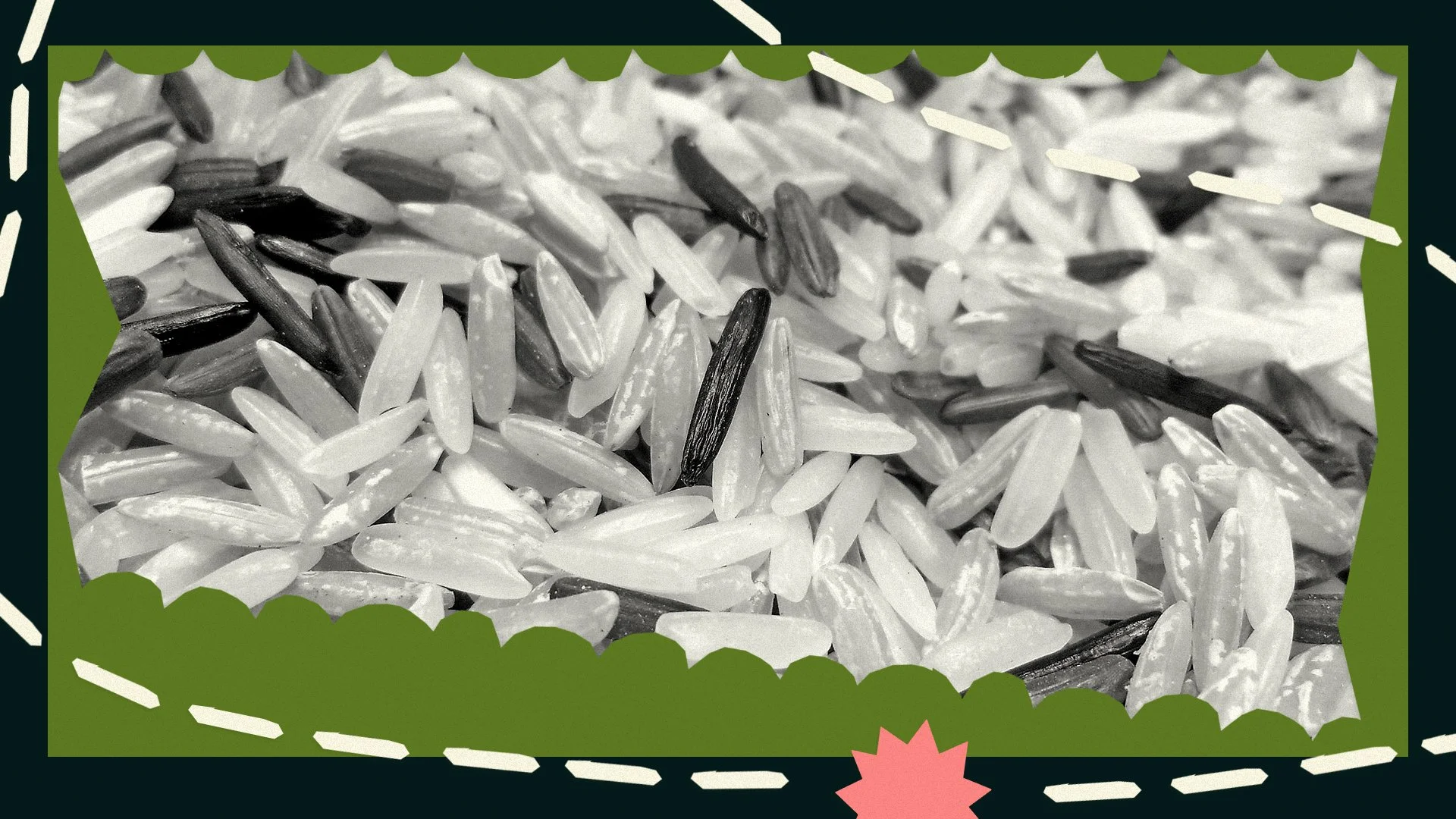
Photo Illustration: Humanizing History Visuals. Photo: Earth100, CC BY-SA 3.0, via Wikimedia Commons
Welcome to Humanizing History™! Every month, we feature a central theme. Each week, we dive into different areas of focus.
This month’s theme: Origins of Food, Our Shared Human Story
This week’s focus: Historical Literacy, or helpful frameworks to expand how we approach history and identity
Today’s edition of Humanizing History™ is about 1,200 words, an estimated 4½-minute read.
Trigger Warning: This newsletter references colonization and enslavement. Please care for yourself as needed.
The Why for This Week’s Topic
This month, we’ve been tracing the layered histories of familiar foods — ingredients that may feel deeply rooted in particular cultures, yet carry global stories shaped by migration, exchange, and power.
While some of these journeys unfolded through trade, others moved through colonization, displacement, and forced labor.
But food is also a record of care: of knowledge carried through hands, seasons, and generations.
By recognizing the unnamed hands that cultivated food, we can expand how we understand (and teach) history. And how we understand culture itself: layered, collective, and a human experience that often transcends borders.
This month, we’re asking:
How do ingredients travel the globe and become part of a culture far from their origins?
Whose hands and knowledge made this journey possible?
What stories emerge when we trace the origins of the foods we may take for granted?
And, what changes when we trace food not just through empires and trade routes, but through systems of knowledge and cultural innovation?
So far, we’ve explored the tomato, potato, and cinnamon.
This week, we turn to a food that quite literally fuels the world: rice.
Rice as Global Staple
Every day, it’s estimated that more than 3.5 billion people eat rice — making it one of the most fundamental foods on Earth.
It feels both humble and immense at once.
Across the world, rice takes on countless forms: steamed and served alongside vegetables and fish; layered with spice into jollof, pilaf, tahdig, or biryani; pressed into sushi by skilled hands; stirred or fried; slowly coaxed into risotto; anchoring curries, chilis, and gumbos; simmered into congee in the morning; paired with beans, peas, or lentils; transformed into noodles, cakes, porridges, puttu, and puddings.
In many cultures, rice is not just part of a meal — it’s central. Essential. It’s memory. Ritual. Offering. It’s “Have you eaten?” — a bowl placed in front of you before words arrive, a form of care when language falls short.
Because rice is such a staple, it’s easy to imagine that it’s always been here, everywhere.
But like the foods we’ve explored this month, rice is the result of deep intention, environmental knowledge, and collective human ingenuity — shaped by water, seasons, and care.
Early Seeds of Rice
When many people think of rice, they think first of Asia — and much of the historical record places us here.
While scholars continue to debate exact origins, archaeological evidence suggests rice cultivation began near the Yangtze River basin in present-day China, roughly 8,000 to 10,000 years ago.
From there, rice farming likely spread across East, South, and Southeast Asia, entwined with monsoon rhythms, seasonal calendars, and careful observation of elements like rain, wind, and soil.
Early rice farmers didn’t simply plant seeds — they learned to read time itself, aligning planting and harvesting with lunar cycles and monsoon rains.
Archaeological evidence suggests that these communities became highly skilled landscape engineers. They developed paddy fields with levees, complex canal networks, and later, terraced hillsides that slowed water flow, prevented erosion, and created microclimates ideal for rice. This was community science — knowledge refined collectively and intentionally across centuries.
These agricultural systems helped support population growth, urbanization, and eventually large political formations. In this way, rice cultivation was foundational to the development of complex societies and later empires — a clear example of how land shapes people and people shape land.
But rice did not emerge from a single place or a single people.
In Asia, Oryza sativa became the dominant cultivated species.
In West Africa, along the floodplains of the Niger River, a distinct species — Oryza glaberrima — was independently domesticated as early as 3,000 years ago. This African-grown rice adapted to local conditions: seasonal flooding, drought cycles, iron-rich soils, and intense heat. It was hardy and aromatic, shaped by hands, place, and practice.
Across regions, rice endured because people adapted it — and women played a central role.
Generation after generation, women are widely understood to have served as primary seed selectors: choosing which plants to save; which seeds to replant; which varieties matured at the right time, resisted pests, survived floods, or tasted best.
This quiet, meticulous labor shaped rice’s genetic diversity long before modern agricultural science existed.
In this light, rice — whether across Asia or Africa — was not simply grown. It was observed. Remembered. Selected. Passed down with care. And those choices still shape what we hold in our palms today.
Rice, Passing Hands
As rice moved beyond its places of origin, it did not move alone. It moved with people — sometimes by choice, often by force.
Through trade routes, rice spread into the Middle East and parts of Europe. Through colonization and enslavement, rice — and the scientific knowledge of rice — also crossed the Atlantic.
Enslaved Africans are often described in history texts for labor, rarely for their expertise. Yet it was their scientific, agricultural knowledge — refined in West Africa — that transformed the wetlands and coasts of the Carolinas and Georgia into major rice-producing regions.
Techniques for managing tides, floodplains, and irrigation systems echoed practices long used in African rice-growing societies.
Rice is also life. There are oral histories and written accounts that describe rice being carefully braided into hair — as means of transport, as acts of survival, memory, and continuity. These acts could be understood as “deliberate efforts” to carry life forward in systems designed to strip people of autonomy and identity.
These stories highlight human ingenuity in the face of dehumanization. It encourages us to see those whom history books label as enslaved as knowledge holders, as seed carriers, as cultural architects — as people who carried life across the Atlantic under unfathomable conditions.
Rice became global not because it was inevitable, but because people — again and again — learned how to work with water and time, often against dehumanizing odds, and insisted on sustaining life.
A Taste of the Past and Future
Rice reminds us that it’s more than just a grain. It’s land, memory, labor, care.
Today, rice sits at the center of urgent questions about sustainability and justice. Climate change threatens water systems and growing seasons. Industrial agriculture narrows genetic diversity. Intellectual property laws increasingly separate farmers from the seeds they've cultivated for generations.
And yet, the future of rice may lie where its story began: in diversity, shared knowledge, and stewardship.
Around the world, farmers, scientists, and seed keepers are working to preserve heirloom varieties — thousands of distinct strains, many adapted to specific climates and conditions. Genetic diversity increases the chances that rice can survive, and fuel, a planet with climate variability.
Today, each bowl of rice carries millennia of adaptation — shaped by unnamed hands that still have impact, and will likely carry us into the future.
So next time you eat rice, consider pausing to ask:
What knowledge made these grains possible?
Whose care shaped its journey?
And what responsibility do we inherit, as its story continues?
Theme: