
The Search for Hidden Water: Innovations from Ancient Civilizations
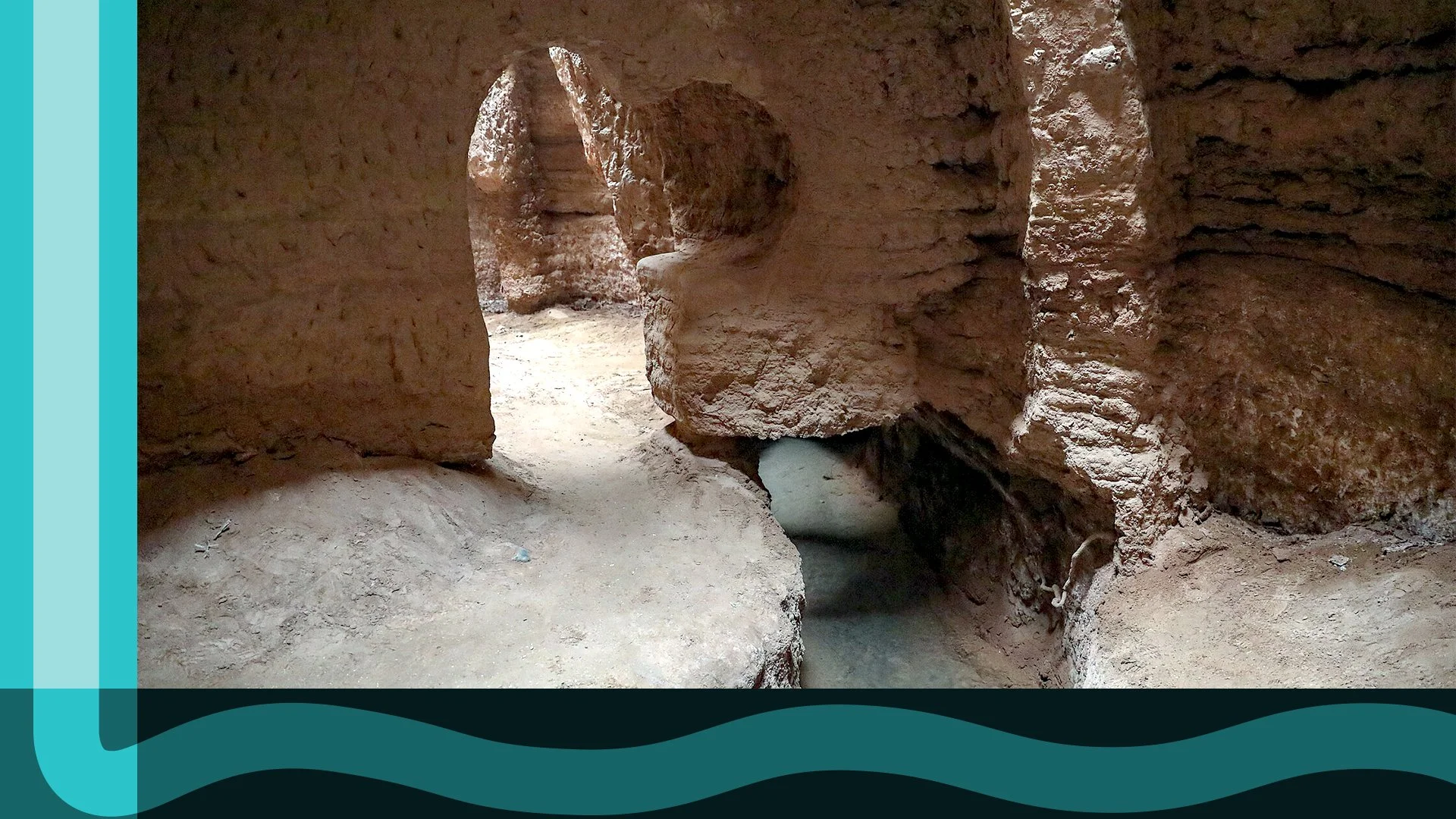
Photo Illustration: Humanizing History Visuals. Photo: Ninara from Helsinki, Finland, CC BY 2.0 via Wikimedia Commons
Welcome to Humanizing History™! Every month, we feature a central theme. Each week, we dive into different areas of focus.
This month’s theme: How Water Shapes People and People Shape Water
This week’s focus: Hidden History, a facts-based resource to highlight technological and cultural innovation
Today’s edition of Humanizing History™ is about 1100 words, an estimated 4-minute read.
The Why for This Week’s Topic
Imagine standing in a dry, arid land. A vast desert. The earth is cracked. The air is hot. And there is not a single river, lake, or stream in sight. Yet, your survival depends on finding water.
Water is essential to human life. More than 70% of the Earth’s surface is water, and nearly 60 percent of the human body is made of it. To survive, most adults need to consume about 2 to 3 liters of water per day.
Yet, water isn’t always visible. Beneath our feet, however, hidden sources of water may exist.
For much of human history, survival depended on knowing where such sources of hidden water lived, often deep underground. Entire communities rose and fell based on this knowledge.
This month, we’re examining how water shaped people, and how people shaped water.
For this week, we’ll explore how people learned to find water where none seemed to exist — at least on the surface — and how technological and cultural innovations shaped some of the earliest known cities and water systems in human history.
Learning to See the Invisible
Water does not always reveal itself easily. In many regions of the world, it appears only seasonally — after rains, during floods — or in pockets hidden underground.
Over time, many ancient societies learned something remarkable: with patience, observation, and experimentation, water could be located, guided, and preserved.
Some of the most impressive innovations emerged in places where water was hardest to find — hot, semi-arid landscapes where survival demanded creativity.
Across time and place, people developed different solutions to similar obstacles: how to harness hidden water in order to sustain life.
These innovations remind us that human societies have long engineered ways to survive in challenging environments — a theme that continues to echo in today’s water challenges.
A 4,000-Year-Old Water Innovation
More than 4,000 years ago, the Indus River Valley — in what is now parts of Pakistan and India — was home to thriving cities like Harappa and Mohenjo-Daro.
Although much about the ancient Indus Valley civilization is not fully known, one thing is clear to archaeologists and historians: its inhabitants understood how to develop water systems.
The region experienced long dry seasons and intense summer heat. Surface water alone could not sustain growing urban populations. So city planners built systems to draw water from underground.
In Mohenjo-Daro alone, upon excavation, archaeologists counted more than 700 brick-lined, freshwater wells, about one for every three households. Additionally, many homes had their own bathing areas and toilets connected to carefully designed drains. Streets contained covered drainage channels and inspection holes that carried waste away, indicating an early understanding of sanitation and public health.
At the center of Mohenjo-Daro stood what historians now call the Great Bath, a large brick-lined water tank sealed with bitumen to prevent leaks. It likely served as a site for ceremonial or ritual communal bathing, and hints at how deeply water may have shaped both daily life and cultural practices.
All of this infrastructure was built more than 4,000 years ago.
Today, historians are still piecing together the story of this ancient civilization. But one thing is clear: people of the Indus Valley were designing urban environments around hidden water thousands of years before the invention of modern plumbing.
Qanats, Underground Tunnels Across the Desert
Elsewhere, another solution emerged.
In the dry landscapes of ancient Persia, or modern-day Iran, rainfall was sparse and rivers often snaked far from settlements.
Instead of simply digging deeper wells, engineers of ancient Persia developed a method to bring distant groundwater toward their communities by constructing carefully sloped underground tunnels called qanats.
Qanats are gently sloping channels that tap into aquifers, or deep underground sources of water. Using gravity, water flows through the tunnels — sometimes traveling for miles or kilometers — before emerging in fields or piping through villages.
Vertical shafts dotted the landscape above the tunnels, providing access points for engineers to maintain the system.
Because the water traveled underground, it remained cool and lost very little to evaporation — an innovative solution in a hot climate.
This technology allowed populations to grow in places that might have otherwise remained uninhabitable. The use of qanats spread widely during the height of the Persian Empire about 2,500 years ago.
Much of the water traveling through qanats originated at the base of mountains. During winter months, the water was especially cold. Engineers of ancient Persia also constructed yakhchals, or dome-shaped mud structures that channeled cooler water into shallow pools, which then formed ice. The thick, insulated walls of the yakhchals preserved the ice for months, creating a method of refrigeration thousands of years before modern or electric refrigeration techniques.
Remarkably, some qanats are still functioning today.
In parts of Iran, water managers known as mirabs continue to oversee these ancient systems. Mr. Nabipour, for example — featured in this video — is a centenarian mirab who has dedicated his life to maintaining and preserving this knowledge.
In his own words, he explains: “Qanat is the cornerstone of our lives, it is our whole existence.”
His life’s work is a living testament to knowledge systems developed more than two millennia ago, which persist today.
Mapping Water in the Modern World
Today, the search for hidden water continues — but some of the tools have changed.
Hydrologists now use satellite data, seismic imaging, and computer models to map groundwater beneath the Earth’s surface. These technologies help identify aquifers — some thousands of years old — that can supply drinking water to cities and irrigation for agriculture.
Modern science often confirms what ancient societies understood millennia ago: water moves through landscapes in complex and sometimes “hidden” ways.
Not everyone, however, has equal access to such technologies. Varying levels of access can influence who taps into and manages vital water resources, making careful stewardship increasingly important.
Protecting these underground reserves today requires observation, planning, and restraint — just as it did in ancient times.
The challenge remains the same: learning where water hides, and how to use it wisely.
Let’s Pause and Reflect
From ancient wells to underground tunnels to satellite mapping, humans have spent thousands of years learning how to find water that isn’t immediately visible.
Where does the water you use every day come from? How is it sourced, stored, or moved?
How did ancient societies locate water when none was obvious on the surface?
What lesson from Indus Valley or Persian qanat systems might inspire how we manage water today?
This week, consider taking a moment to notice the water around you — rainfall, rivers, reservoirs, pumps and plastic bottles, or even the pipes beneath your city streets. Behind each source likely lies a longer history of observation, planning, and human ingenuity.
Theme: