
Field Trip: Norway
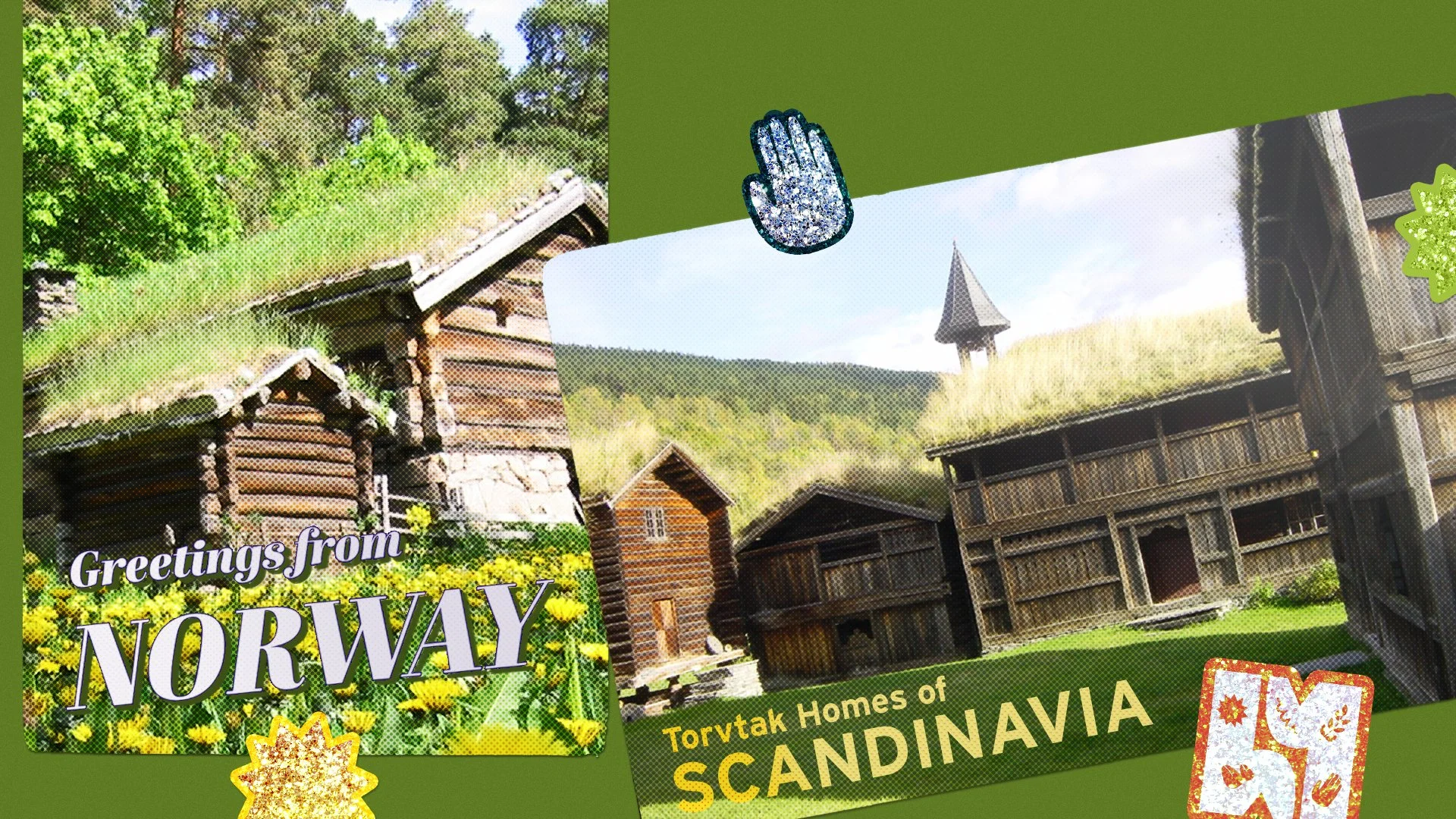
Photo Illustration: Humanizing History Visuals. Photos: Roede, Kjetil Bjørnsrud/CC BY-SA 3.0 via Wikimedia Commons.
Welcome to Humanizing History™! Every month, we feature a central theme. Each week, we dive into different areas of focus.
This month’s theme: Summer Field Trip, The Shape of Home
This week’s focus: Field Trip, where we highlight significant historic, archaeological, and cultural sites around the world
Today’s edition of Humanizing History™ is about 900 words, an estimated 3-minute read.
The Why for This Week’s Topic
Imagine hiking through the Norwegian countryside in early summer.
Wildflowers sway in the breeze. Moss clings to stone. Birch and pine trees spread toward the horizon. Mountains rise above green valleys and blue fjords carved from ancient glaciers.
You may then notice something unusual.
Windows appear in what first seemed like a grassy hillside. It isn’t part of the natural hillside — it’s a constructed home.
Grasses flourish across the roof. Tiny flowers bloom. Bees drift from blossom to blossom. In winter, that same roof disappears beneath a blanket of snow. By spring, it awakens once again.
The house does more than sit on a landscape. It seems to grow from it.
Across Norway — and other parts of Scandinavia — people built homes with roofs made from layers of birch bark, soil, and living sod.
As seasons changed, the roofs changed too. Summer brought grass and wildflowers. Autumn painted them shades of gold. Winter covered them with snow, adding another layer of insulation against the cold.
These roofs became both shelter and landscape.
This month, our Summer Field Trip series explores the shape of home — the many ways people across the world have learned to belong to the places they live.
Last week, we traveled to California’s Coachella Valley, where generations developed relationships with a landscape stretching from the desert floor to the pine forests more than 10,000 feet above.
This week, we journey north, where we’ll ask another question: How do you build a home when winter becomes one of your greatest teachers?
Building with Winter
Life in Scandinavia is shaped by long winters.
Snow can cover the ground for months. Temperatures fall well below freezing. Fierce winds sweep across the landscape. Timber is often limited. And every bit of warmth matters.
Rather than trying to defeat winter, generations of people learned to build with it.
Scandinavia is one chapter in a much larger human story. Communities facing cold climates and limited building materials — across Arctic regions, parts of Central Asia, and portions of North America — developed similar innovations: the landscape itself often became part of their home.
Researchers suggest that sod roofs evolved gradually through careful observation.
During the Neolithic era, it’s believed that humans built early shelters with mud and earth to block wind and rain. Over time, grasses rooted in the soil — perhaps through combinations of windblown seeds or human intervention — helped bind the layers together.
Over generations, builders refined this process, carefully cutting living sod from nearby meadows and placing it atop roofs — creating a covering that was stronger, more durable, and better insulated against more harsh weather.
Such construction would reflect a deep understanding of local materials. Birch bark naturally shed rainwater. Thick layers of earth trapped warmth. Living grasses protected the roof from erosion. Every winter, snowfall became part of the design, forming another layer of insulation.
What appears simple may also reflect centuries of environmental knowledge built one layer at a time, passed through the hands of generations.
A Living Roof
Unlike asphalt shingles or metal roofing, a sod roof is never truly fixed or finished. It grows.
It changes with every season. It doesn’t look the same in July as it does in January. It continues to shift across decades and generations.
The surrounding environment continues to shape it. Rain and sun nourish it. Birds and insects interact with it. The roof changes because it is integrated into the surrounding ecosystem.
What began as a practical response to a harsh climate became a remarkable example of building with a landscape rather than against it, or simply upon it.
The roof doesn’t stop becoming. It continues a conversation between people and place, long after the construction ends.
Ancient Ideas, New Questions
While traditional sod roofs may not be as common across much of Scandinavia today as they were long ago, the idea of “green roofs” has found new life.
Around the world, architects and engineers increasingly design green roofs that absorb rainwater, reduce summer heat, provide habitat for pollinators, and lower the energy needed to heat and cool buildings.
In many ways, today’s “green architecture" is a reinterpretation of principles that communities understood centuries and millennia ago.
Perhaps each generation asks similar questions: How should our homes respond to the places where we live?
A Small Invitation
When we think about home or shelter, we often imagine walls and roofs separating us from the natural world. The tradition of sod roofs suggests another framing or possibility.
Perhaps the strongest homes are not always those that separate us from the landscape. Perhaps they are the ones that learn to participate in it.
As you think about your own sense of home and community, consider:
What features of your local environment have shaped the homes around you?
What building traditions have been passed from one generation to the next?
Where do you see people designing with nature instead of against it?
If your home reflects the landscape where you live, what might it look like?
The living roofs of Scandinavia remind us that home is built in layers — layers of earth, knowledge, and generations learning not to build apart from a place, but within it.
Theme: