
A Country’s Story: What Ideas Build the Foundation?
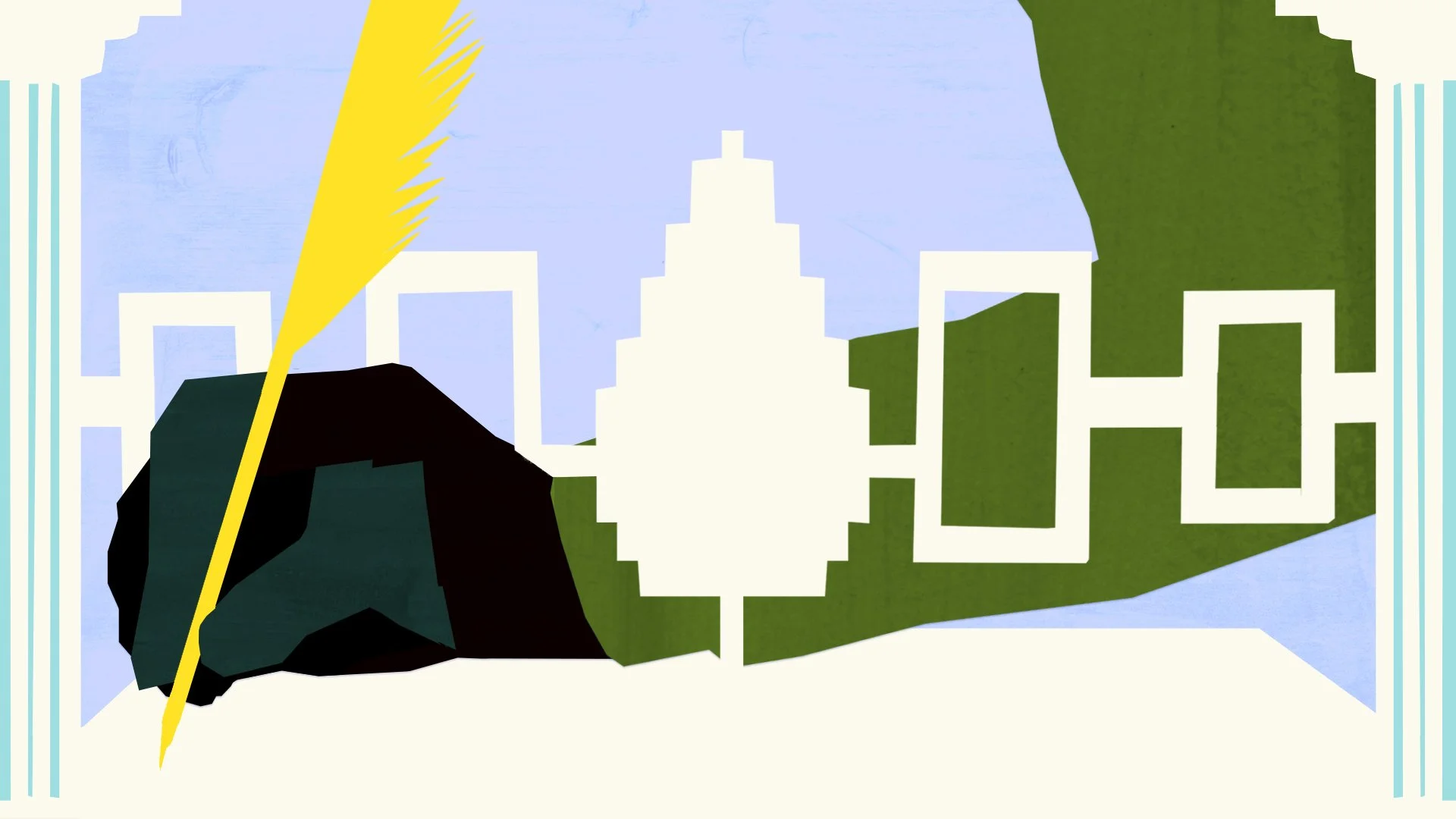
Illustration: Humanizing History Visuals.
Welcome to Humanizing History™! Every month, we feature a central theme. Each week, we dive into different areas of focus.
This month’s theme: How We Tell a Country’s Story
This week’s focus: Historical Literacy, or helpful frameworks to expand how we approach history and identity
Today’s edition of Humanizing History™ is about 1200 words, an estimated 4-minute read.
The Why for This Week’s Topic
Imagine a camera focusing on a wooden desk. A large sheet of parchment is spread across it. A quill in hand, already in motion. Words scrawled at the top of the page: “Declaration of Independence."
The camera lingers: “We hold these truths to be self-evident, that all men are created equal.” Then: “Life, Liberty and the pursuit of Happiness.” And finally: governments deriving their “just powers from the consent of the governed."
For many students, especially those educated in the United States, this image is recognizable. It’s often framed as a foundational scene in the country’s origin story, and in how many people learn to define democracy itself.
This year marks the 250th anniversary since the signing of the Declaration of Independence. Anniversaries like this often invite reflection, celebration, critique, and conversation. They ask us to return to what we consider foundational. Inspiring.
And while documents like this matter deeply, they also encourage us to ask: Where do ideas like democracy come from? Are such ideals created in a single moment, or do they belong to a much longer human conversation?
This month, we’re examining how we tell a country’s story.
Last week, we asked: When and where do we begin? We explored how every starting point is a framing choice — much like a camera deciding where to point, what to focus on, and what to leave just outside the frame.
This week, we continue to expand the lens, asking: What ideas build a country?
What Ideas Build a Country?
Democracy is often told as a single-origin story — something invented in one place, at one moment, by a single hand, held in a defining document.
Documents do matter. The Declaration of Independence was both symbolic and consequential. Its language and ideals shaped political movements, constitutional thought, and global conversation about rights and governance.
But if we widen the frame, something else comes into view: that ideas about participation, responsibility, and collective-decision making were not limited to a single room, century, or nation.
Across time and place, communities have asked similar questions: How do we live together? How do we distribute power? How do we make decisions collectively (or not)? How do we hold disagreements without breaking connection?
The answers may have varied, but the questions echo across generations.
In this light, democracy is not a single invention. It’s more like a braided system of ideas — formed across time and place, shaped by human hands, relationships, conflict, cries for peace, negotiation, hope, and the shared narratives that forge the foundation of a country.
Expanding the Frame
Let’s move the camera, and imagine placing it along the coastal shorelines of Cape Cod, Massachusetts.
Zoom in. Hands are working with shells: quahog clams carefully harvested from the bay, opened with gentle fire, shaped slowly with rocks until formed into small beads — white and deep purple. Each one carrying hours of labor, patience, repetition, and care.
These beads, known as wampum, are not used for simple decoration. They are strung into belts that carry meaning across generations. They are records. Relationships. Agreements. Oral history made visible and tangible. A governing document, an inheritance meant to be held.
Among the most widely recognized examples is the Hiawatha Belt, associated with the Haudenosaunee Confederacy, also referred to historically in many texts as the “Iroquois Confederacy,” a term introduced by French colonists.
The Haudenosaunee Confederacy is a living political system — “united by a common goal to live in harmony” — whose roots extend long before the founding of the United States, and it continues today.
The Hiawatha Belt represents the joining of Native Nations — the Mohawk, Oneida, Onondaga, Cayuga, Seneca, and later on, the Tuscarora — under what is often called the Great Law of Peace.
At its center is a tree symbolizing unity and connection. The belt records an agreement: separate Nations, including communities once in conflict, choosing to form a shared system of governance grounded in peace, responsibility, and collective decision-making.
Under the Confederacy, representatives from each Nation participate in a Grand Council. Deliberation emphasizes consensus rather than a simple majority rule. Leadership responsibilities are distributed rather than concentrated in a single leader. Clan Mothers also hold important authority, including selecting and removing representatives, or chiefs.
The Haudenosaunee Confederacy is often described as “the oldest participatory democracy on Earth.” While historians debate the precise origins and timelines of the Confederacy — oral history and astronomical data often place the founding in the 1100s or 1400s CE — what remains clear is that a sophisticated system of governance existed in the Americas before the 250-year founding of the United States.
Braiding Ideas Across Time
Were the Framers of the United States inspired by the Haudenosaunee Confederacy?
Historians continue to debate the extent and nature of that influence.
What is clear is that the Haudenosaunee Confederacy existed as a functioning, sophisticated political system in the same geographic region as the colonies that would eventually become the United States. And leaders, such as Benjamin Franklin, interacted diplomatically with members of the Haudenosaunee Confederacy, such as Canassatego.
Some later acknowledgments — including U.S. Senate Resolution 331 (1988) — recognized Indigenous governance systems as among the many influences considered and discussed by Framers of the U.S.
As a newly formed country, the United States did develop its own governing structure — one shaped by many influences, including ancient Greece, Enlightenment philosophers, colonial experience, and likely political ideas already present across the Americas. The U.S. formed a distinct representative democracy that would profoundly influence movements and governments beyond its borders.
But perhaps the larger point is to expand the lens. To ask ourselves if democracy belongs to one confederacy or county, one document or community. Or, if it’s part of a larger story.
If we hold both images at once — the parchment and quill, and the shells that formed wampum belts — we may begin to notice something important: ideas travel.
They move across generations. And across borders. They are debated, adapted, preserved, and reshaped by many hands.
When we think about democratic ideas this way, they stop looking like isolated inventions and begin to look more like something woven. A braid of influences, experiences, arguments, and aspirations carried across time and place.
Some ideas are held in belts made of shells, others in parchment documents. Others in oral histories, assemblies, classrooms, protests, councils, or conversations around dinner tables.
And perhaps that’s what forms a country’s narrative, livelihood, patriotic ideals. It doesn’t just live in a single founding document, it’s also carried through the ongoing work of diverse people finding ways to live together harmoniously. If democracy is something people inherit, it’s also something people participate in, reshape, and sustain.
And the story of the United States is not finished. The camera is still recording. And this time, the world is watching.
Classroom Connection
Imagine you are asked to place three objects inside a glass case or large room to represent the ideas that hold a community together.
What would you choose? What objects, materials, or symbols represent foundational ideas?
A document. Photograph. Flag. Family recipe. Recording of someone’s voice. A statue. A council fire. A digital screen filled with a multitude of faces. Something else?
What objects carry memory, responsibility, or shared values across generations?
And what might future historians learn about us from the things we choose to preserve?
Next week, we’ll continue expanding the frame for how we tell a country’s story, asking: who gets embraced.
Theme: